A famous saying teaches "...projects don't fail due to technology. They fail due to politics, budget, or compliance." Despite this painful reality, IT teams continue to propose new technologies, tools, and projects almost entirely on the basis of the technical merits; only for us to be frustrated when we're refused because of those 3 non-technical elements. In addition to the challenge of explaining deeply complex technical elements in simple terms, making the case to the business requires IT folks learn about and speak to concepts like business justifications, RFP's, ROI, and more - which many of us are loath to do. But the hard truth is this: if a request isn't made understandable and meaningful to business leaders, it's not going to get done. In this talk, I'll elaborate on why the business continues to ignore our compelling technical arguments, why IT practitioners need to be the ones to adapt, and how to present initiatives in a way the business will appreciate - all without compromising our identity as technical professionals in the process.
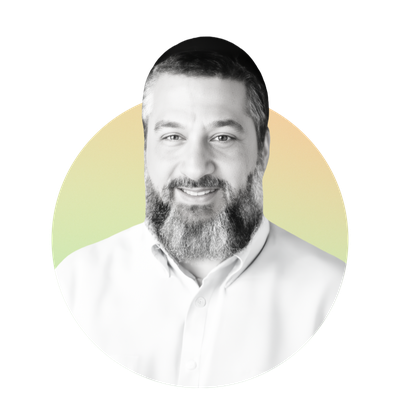
In my sordid career, I've worked as an actor, bug exterminator, wild-animal remover, electrician, carpenter, stage-combat instructor, ASL interpreter, and Sunday school teacher. Oh, and I also work with computers. While my first digital experience was an Atari 400, my technical career started in 1989 (when you got Windows 286 for free on twelve 5¼” when you bought Excel 1.0). Since then I've worked as a classroom instructor, courseware designer, helpdesk operator, desktop support staff, sysadmin, network engineer, and software distribution technician. Then, about 27 years ago, I got involved with monitoring. I've worked with a wide range of tools: Tivoli, BMC, OpenView, janky perl scripts (another way of saying "Tivoli"), Nagios, SolarWinds, DOS batch files, Zabbix, Grafana, New Relic, and other assorted nightmare fuel. I've designed solutions for companies that were modest (~10 systems), significant (5,000 systems), and ludicrous (250,000 systems). In that time, I've learned a lot about monitoring and observability in all it's many and splendid forms.