LLMday is a worldwide series of community events for engineers building with large language models, AI agents and machine learning. Across cities around the world, we bring together practitioners working on AI-powered products and systems to share real-world experience, learn from each other and explore how software engineering is changing in the age of AI.
As AI agents move beyond demos, the real challenge becomes giving them reliable, structured access to enterprise systems. This talk walks through how we evolved a unified data platform into an agent-ready platform using a semantic layer, knowledge graph principles, and MCP-based tool abstractions. We'll cover how structure—not just models—enables reasoning, governance, and cross-system workflows. The focus is on practical design patterns that make agents usable in real production environments.... Read more
What if software design debates weren’t between engineers…but between AI agents? We’ll explore the pattern of multi-agent debate, and how it can be applied to software design questions. What’re the challenges, and how can it complement human architectural thinking.... Read more
I will talk about current brain-inspired AI and discuss the actual mechanics behind the "20W brain" pitch to move beyond simple inspiration toward systems that deeply mirror biological inner workings. I’ll highlight how modern neurotechnology provides direct access to the biological data that LLM interpretability researchers are currently forced to infer. Finally, I’ll introduce Neuraffica, my project bridging neuroscience and AI to turn these biological ground truths into reality.... Read more
It is time to embrace AI in interviews. We do not need to fear that ‘AI will take our jobs,’ but that ‘people who know how to effectively use AI will take the jobs of those who don’t.’ This shift in perspective must drive a fundamental change in how we interview and assess talent.... Read more
Large language models are rapidly transforming how humans interact with machines. Yet most AI systems focus on generating text, rather than understanding the deeper cognitive signals embedded in human communication.
In this talk, Aoi Minamoto introduces KinaBot, an AI system that transforms everyday conversations into measurable cognitive insights. By combining speech processing, natural language analysis, and large language models, KinaBot analyzes conversational patterns such as vocabulary diversity, sentence structure, response latency, and semantic coherence to generate indicators of cognitive trends over time.
Unlike traditional cognitive assessments that rely on clinical tests conducted in controlled environments, KinaBot explores a new paradigm: continuous, natural, and non-invasive cognitive monitoring through daily conversations.
The talk will demonstrate how voice interactions can be converted into structured signals that help individuals, families, and caregivers better understand changes in communication and cognitive patterns.... Read more
Sizing infrastructure for LLM workloads is uniquely hard: model architectures shift, training cycles are unpredictable, and inference demand can spike overnight. Yet most capacity decisions are still made by intuition rather than modeling, resulting in either wasteful over-provisioning or painful bottlenecks at the worst moments. This talk offers a structured approach to capacity planning and cost strategy that works even before your workload is fully understood.... Read more
Most organizations still make CX, marketing, and AI investment decisions using static dashboards and backward-looking metrics.
In this session, I’ll show how we transformed a traditional ROI model into an agentic AI “ROI strategist” embedded directly into a startup’s MarTech stack. This system is capable of predicting revenue, net profit, CAC, churn, and customer lifetime value over a three-year horizon in real time.
Starting from a Salesforce + CDP + data warehouse environment, we used n8n as the orchestration layer and Model Context Protocol (MCP) servers as the tool interface to build an LLM-powered agent that:
- Ingests live data from CRM, CDP, and financial systems - Runs forward-looking simulations across best, expected, and worst-case scenarios - Benchmarks performance against industry standards and top competitors - Generates executive-ready financial outputs including ROI, margin, CLV, and churn - Pushes predictions back into the MarTech stack for activation I’ll walk through the actual architecture, including how MCP servers expose data and tools, how the agent loop is designed, and how we made the system reliable through guardrails, evaluation, and cost control.
This is a practical, production-focused session for builders and product leaders who want to move beyond LLM demos and design agentic systems that drive real business outcomes.... Read more
AI-powered auto-replenishment is shifting retail from reactive transactions to anticipatory, intelligent commerce. At LLMday, we’ll explore how large language models (LLMs), combined with predictive ML systems, are redefining loyalty and customer lifetime value (CLV) in high-frequency retail categories. Modern replenishment engines go beyond fixed subscriptions and rule-based triggers. By integrating cross-channel signals, purchase history, household context, behavioral data, and IoT inputs, AI systems dynamically predict when consumers need essential products—reducing friction, decision fatigue, and “household management anxiety.” Retailers deploying predictive basket models have seen measurable retention gains over traditional loyalty programs, especially in groceries, personal care, and healthcare. This session dives into the technical architecture behind these systems, including sequence models (e.g., RNNs), reinforcement learning for timing optimization, API-first orchestration layers, and the emerging role of LLMs in contextual reasoning, personalization logic, and conversational reorder interfaces. We’ll examine key analytical challenges such as seasonality shifts, life-event detection, sparse data cold starts, and model drift. We’ll also address critical concerns around privacy, bias, autonomy, and federated learning approaches that enhance personalization without centralizing sensitive data.... Read more
What happens when AI agents encounter tasks they cannot solve? Most agents fail because their capabilities are fixed. This talk explores a new approach using only open-source frameworks where agents can now adapt themselves by dynamically generating and integrating new tools at runtime. We will examine the architectural mechanisms that enable this, including how new functionality is validated and incorporated safely during execution. Through a live demo, attendees will see an agent encounter a novel task, build the required capability, and complete the workflow without redeployment. Attendees will additionally gain practical engineering insights into the tradeoffs and design considerations involved in building autonomous agentic systems that evolve beyond their original design.... Read more
Traditional RAG has a fundamental limitation: vector search retrieves text, not structured data. When you need precise answers, LLMs guess aggregations from text chunks
instead of executing calculations. This causes wrong averages, fabricated counts, and approximate results.
Graph-RAG solves this by storing data as entities and relationships, enabling structured queries that execute calculations instead of estimating from text. Join me as I build
a travel agent demo that compares both on 515K hotel reviews proving where RAG fails and how graphs deliver accurate answers.... Read more
As organizations move beyond AI proofs of concept into production deployments, a new set of challenges emerges. The question is no longer whether AI agents can work, but whether they can be trusted to operate reliably at scale. This talk examines the critical gap between building an agent and running one in real-world enterprise environments.
We reframe reliability as a multi-dimensional problem spanning infrastructure, model availability, output validity, semantic correctness, and behavioral consistency. Unlike traditional software systems, AI agents are inherently probabilistic, requiring new approaches to service-level expectations, including accuracy thresholds, guardrails, and human-in-the-loop workflows.
The session explores practical patterns for designing production-ready agents, including deterministic orchestration layered with controlled model autonomy, structured outputs with validation, and multi-model fallback strategies. It also highlights the importance of observability beyond uptime—covering traceability, quality evaluation, cost monitoring, and behavioral analytics—to detect and mitigate silent failures.
Finally, we address system integration concerns such as policy enforcement, auditability, data governance, and safe rollout strategies. Attendees will leave with a concrete mental model for architecting agents as composable, governable systems rather than monolithic LLM calls, along with actionable guidance on building evaluation-first workflows that enable continuous improvement and safe scaling.
This talk is designed for engineering and platform teams tasked with turning AI agents into dependable, enterprise-grade systems.... Read more
AI agents can now run workflows, access tools, and make decisions across real systems. Projects like OpenClaw show how fast autonomous agents are evolving. But in the rush to make agents more capable, we’ve skipped an important question: what should they actually be allowed to do? This talk explores why guardrails are becoming essential infrastructure for AI, and how teams can safely give agents access to real tools without losing control.... Read more
Most multi-agent demos look impressive, but production systems often fail – not because of model quality, but due to orchestration, context handling, tool access, and evaluation.
This talk presents a real-world multi-agent system for enterprise B2B marketing, including transparent agent routing, multi-level memory (session, user, org), and two key workflows: plan-and-execute and discover-and-create. It also shows how the Model Context Protocol (MCP) standardizes tool access and reduces integration complexity.
A core focus is evaluation: even high-performing agents can fail together due to cascading errors. A composable evaluation framework and the “compositionality gap” are introduced to diagnose system performance.
Finally, lessons on building teams are shared – emphasizing hybrid ML-engineering roles, cross-functional evaluation, and embedding trust and governance from the start.... Read more
Enterprise web development has expanded rapidly with the adoption of microservices architectures, cloud native infrastructure, API driven ecosystems, and distributed data platforms. Large organizations now operate hundreds of services, thousands of APIs, and complex CI/CD pipelines across multi cloud environments. While these architectures enable scalability and rapid innovation, they also create significant cognitive load for engineering teams who must navigate extensive documentation, service dependencies, compliance requirements, and evolving architectural standards. This session explores how large language models and AI systems are becoming practical productivity accelerators in modern enterprise development workflows. The talk first examines AI driven knowledge systems that unify fragmented technical documentation across code repositories, architecture diagrams, ticketing platforms, and internal knowledge bases. Through semantic search and retrieval augmented generation, engineers can interact with institutional knowledge conversationally and retrieve contextual insights from distributed sources, reducing the time spent locating critical technical information. The presentation then discusses AI assisted development environments where intelligent coding tools support engineers by generating service scaffolding, validating API contracts, recommending refactoring strategies, and identifying potential security issues. These capabilities help automate repetitive development tasks such as boilerplate generation, syntax corrections, and dependency analysis. The session also highlights AI enabled testing and developer onboarding systems that analyze historical defect patterns and architectural documentation to guide testing strategies and accelerate knowledge transfer. Together, these capabilities demonstrate how human AI collaboration can improve developer productivity while maintaining engineering oversight in large scale enterprise platforms.... Read more
Generative AI and large language models are rapidly transforming how enterprise user interfaces are conceived, prototyped, and refined. While these systems accelerate exploration and automate repetitive design tasks, they also introduce new challenges in preserving human judgment, design intent, and organizational brand consistency. This session examines emerging human-in-the-loop frameworks that position LLMs as collaborators rather than replacements for expert designers. Drawing on real-world enterprise UX patterns, the talk outlines how AI-generated outputs can be systematically evaluated to maintain usability, accessibility, and human-centered design principles. It highlights approaches to ensuring that generative variations remain aligned with brand guidelines, interaction models, and product standards—especially in regulated or high-stakes environments. The session further explores workflow models for integrating generative AI into UI design processes, including collaborative review loops, intent-preserving prompt strategies, and safeguards against drift in accessibility or experience coherence. By comparing the strengths of human intuition with the scale and speed of LLM-driven systems, attendees will gain clarity on where AI meaningfully accelerates design iteration—and where human oversight remains essential.... Read more
18:30
Wrap up
Scan each other's QR codes & head to a nearby pub!
A famous saying teaches "...projects don't fail due to technology. They fail due to politics, budget, or compliance." Despite this painful reality, IT teams continue to propose new technologies, tools, and projects almost entirely on the basis of the technical merits; only for us to be frustrated when we're refused because of those 3 non-technical elements. In addition to the challenge of explaining deeply complex technical elements in simple terms, making the case to the business requires IT folks learn about and speak to concepts like business justifications, RFP's, ROI, and more - which many of us are loath to do. But the hard truth is this: if a request isn't made understandable and meaningful to business leaders, it's not going to get done. In this talk, I'll elaborate on why the business continues to ignore our compelling technical arguments, why IT practitioners need to be the ones to adapt, and how to present initiatives in a way the business will appreciate - all without compromising our identity as technical professionals in the process.... Read more
Modern observability platforms produce massive volumes of high-cardinality time series data across thousands of entities, creating a poor fit for large language models. When raw telemetry is passed directly into an LLM, the result is often excessive token consumption, loss of critical signals through truncation, and inconsistent analytical outputs that reduce troubleshooting reliability. This session introduces Semantic Condensation, a token-aware transformation layer that converts large-scale telemetry into structured, semantically coherent summaries designed for LLM consumption. The approach combines vectorized statistical pre-analysis, multi-signal importance scoring, adaptive token-budget tiering, and behavior-aware trend classification to preserve anomalies, change points, and operational patterns while minimizing representation cost. Rather than relying on traditional downsampling or aggregation alone, Semantic Condensation is designed specifically for LLM interpretability and semantic consistency. It helps ensure that summaries remain internally coherent, scales to thousands of time series under strict latency constraints, reduces token footprint by orders of magnitude, and improves downstream troubleshooting accuracy by as much as 25 percentage points in evaluated scenarios. Attendees will leave with practical strategies for building LLM-aligned telemetry pipelines, reducing contradictory outputs, and enabling scalable, production-grade AI observability assistants. More broadly, this talk presents a new abstraction layer for observability: semantically consistent, token-efficient representations that make reliable LLM-driven troubleshooting possible.... Read more
Thirteen CPU servers. One percent utilization. $2,500 a month in cloud spend for an image classification pipeline that could barely keep up. This is the story of how we replaced an entire always-on CPU fleet with a GPU-first architecture and what we learned along the way. I'll cover the cost analysis that made the business case undeniable, the architectural design using KServe and Triton on GKE with separate node pools for real-time and batch inference, and the deployment strategy that eliminated cold starts during business hours while scaling to zero overnight. You'll leave with a repeatable framework for evaluating whether your own inference workloads are candidates for GPU migration, and concrete numbers showing that faster doesn't have to mean more expensive.... Read more
Agentic pipelines break in production, quietly, and in ways that are hard to catch. This talk skips the theory and gets straight to it: what actually fails, why it's tricky to debug, and how to fix it fast. We'll use the Anthropic API and LangSmith to trace real failure modes, wrong tool calls, context blowups, and agent loops, and I'll fix a broken agent live on stage so you can see the whole debugging workflow in action. You'll leave with patterns you can use the next day.... Read more
With payment protocols like x402, MPP, or KYAPay, agents can pay for and use services without accounts or subscriptions. In this talk, I'll walk you through the core concepts behind these protocols and showcase how we tackled some of the major implementation challenges.
Giving agents the ability to pay on behalf of users is a huge step forward towards truly autonomous workflows, and this session will show you how it can be done.... Read more
As AI agents gain autonomy to chain tools, access live data, and execute multi-step workflows, they introduce an attack surface that traditional application security wasn’t built for — prompt injection cascades, tool-use hijacking, memory poisoning, and cross-agent privilege escalation. Static guardrails and fixed policy rules can’t keep pace with adversaries who adapt in real time. This talk presents an adaptive security framework for agentic LLM systems that combines runtime threat detection, dynamic trust scoring, and self-healing policy enforcement to defend pipelines without sacrificing agent capability. Drawing from recent 2026 research on adversarial robustness in neural networks and LLMs, we’ll walk through how to build defense layers that learn from attack patterns and adjust isolation boundaries, tool permissions, and context windows on the fly. Attendees will leave with practical architectural patterns for implementing adaptive security in production agentic systems — moving beyond “block or allow” toward intelligent, continuous defense.... Read more
As AI agents move from assistants to decision-makers, the architecture of commerce is fundamentally shifting.
Static catalogs are giving way to dynamic, graph-driven systems, and APIs are evolving into interoperable protocols.
The buying journey is no longer designed—it’s computed.
This session explores how AI + universal protocols are redefining commerce—toward composable, context-aware, autonomous transactions.
This isn’t an incremental shift—it’s a rewiring of how the world buys.... Read more
The rapid proliferation of goal-oriented, autonomous AI agents has fundamentally disrupted traditional identity management paradigms. In high-compliance sectors such as FinTech and Healthcare, AI agents are increasingly authorized to execute sensitive transactions and retrieve protected health information (PHI) with minimal human intervention. However, current security infrastructures lack a standardized “first-class identity” for these entities, relying instead on legacy patterns like Implicit Context Inheritance or Long-Lived Service Tokens. These anti-patterns violate the Principle of Least Privilege (PoLP), leading to unmanageable security impact scopes. This paper investigates the necessity of transitioning to a dynamic, identity-centric Attribute-Based Access Control (ABAC) model. Through a 12-month architectural audit of N > 100 agents, we demonstrate that a First-Class Identity framework effectively decouples agent authority from broad user sessions.... Read more
Since the "DeepSeek moment," the frontier labs have quietly shifted how they train agents — away from human feedback and toward RL environments with automated, verifiable rewards. The same pattern is now reaching application teams, and most of us haven't caught up.
This talk is a hands-on introduction to RL environments for LLM agents. We'll cover what they are, why they make eval suites look primitive by comparison, and the core components you need to build one. Then we'll build a working environment for a multi-step agent — verifiable rewards, real episodes, and a feedback loop that lets the agent improve itself between runs without any fine-tuning.
The same 200 lines that grade your agent can also teach it.... Read more
Modern clinics generate vast amounts of data, from biomarker tests and imaging to functional assessments and patient symptom profiles, yet much of it remains underutilized. This talk explores how Large Clinical Language Models (LCLMs) can transform fragmented clinical data into structured, actionable intelligence.
By integrating diverse clinical signals, LCLMs enable comprehensive patient representations and deliver insights directly at the point of care. Drawing from real-world deployments, we highlight how AI can augment clinician decision-making and unlock the full value of clinical data for more personalized, precise care.... Read more
Every LLM inference call runs through GPU kernels that are rarely optimized for the hardware they're running on — and that hidden inefficiency costs the industry billions. At Wafer, we build autonomous AI agents that optimize these kernels across hardware platforms. In this talk, I'll walk through what it actually looks like when AI operates at the compiler and kernel layer: how our agents discover optimization opportunities that humans miss, the real results we've shipped, and why we believe autonomous performance engineering is the key to making intelligence radically cheaper and more energy-efficient.... Read more
Retail IT portfolios that support e-commerce, supply chain, and in-store technologies often struggle under traditional PMO models. Status tracking spread across spreadsheets, limited visibility into dependencies, and inconsistent governance controls make it difficult for leaders to obtain a reliable view of portfolio performance. These gaps slow decision making and weaken oversight across complex technology programs. This session presents a Digital PMO framework designed to improve transparency and governance through the integration of Jira and Confluence. The framework brings together concepts from PMO and IT governance research into a practical operating model that connects strategy with delivery execution. Strategic themes, initiatives, OKRs, epics, delivery telemetry, risk indicators, and executive reporting are unified within a shared system of record that enables consistent monitoring and portfolio level insight. A retail case study demonstrates the framework in practice within an Automotive Care Center technology portfolio involving more than 20 cross-functional teams and approximately 50 initiatives per quarter over a six-month period. Results included a 30 percent reduction in PMO effort within six months and an additional 30 percent reduction by month twelve, while program management roles decreased from eight to three. Stakeholders also reported improved transparency, faster trade-off decisions, and greater confidence in real-time portfolio reporting. Attendees will learn how integrated tooling, standardized governance templates, centralized intake processes, and portfolio dashboards can support auditability, improve delivery visibility, and strengthen governance across large retail technology programs.... Read more
Training modern Large Language Models (LLMs) requires tens of thousands of accelerators acting as a single "AI Supercomputer." To build this infrastructure, we must first address the CPU bottlenecks of traditional general-purpose networking. This talk analyzes why standard TCP/IP processing limits training performance and introduces the role of "Kernel Bypass" and SmartNICs in offloading network processing from the host CPU. We will explore the transition toward hardware offloads like RDMA to achieve the throughput and nanosecond-latency required for accelerator-to-accelerator communication. The session concludes with the architectural challenges of running lossless transport over lossy Ethernet and the design patterns required to ensure reliable delivery in massive hyperscale environments.... Read more
18:00
Wrap up
Scan each other's QR codes & head to a nearby pub!
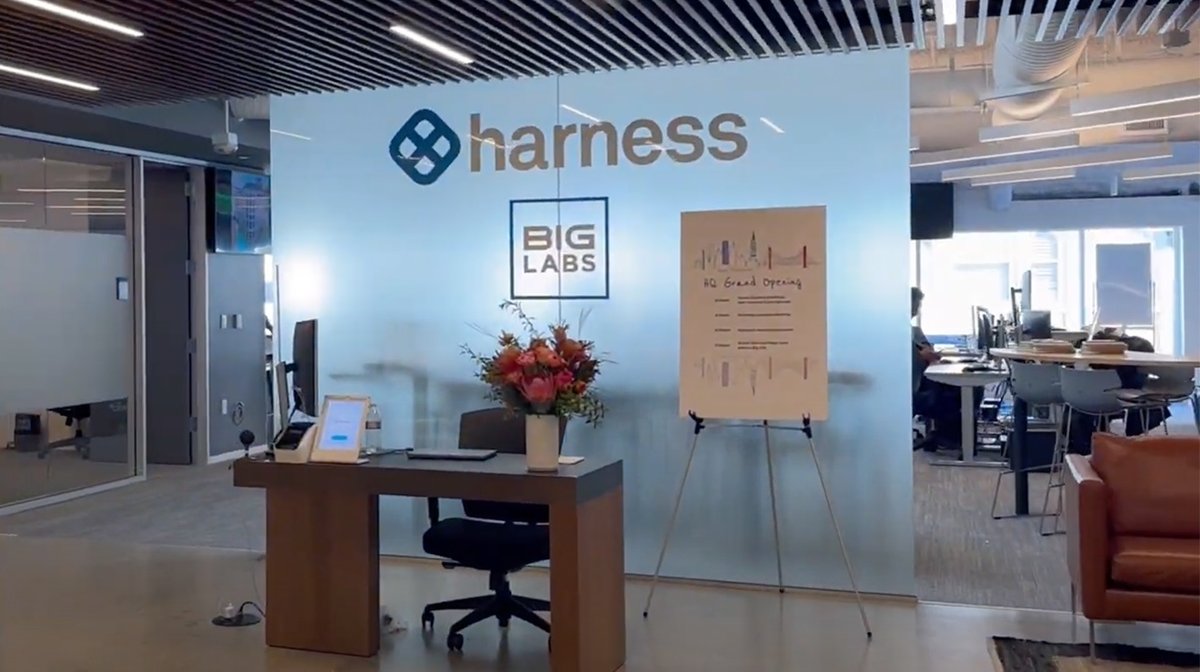
55 Stockton St, San Francisco,
CA 94108, United States
Sponsors & Partners
Want to become a sponsor? Get in touch!
Lior Schejter
MAD About Software Design - When AI Architects Argue
Abstract
What if software design debates weren’t between engineers…but between AI agents? We’ll explore the pattern of multi-agent debate, and how it can be applied to software design questions. What’re the challenges, and how can it complement human architectural thinking.
Bio
A software professional for over 20 years and software enthusiast for over 40 years.
Still curious about how to develop software better, in whatever scale.
And generally curious about how things work in the world.
Marta Gajowa
Stealth Startup
Neuroinspired AI: From Analogy to Mechanism
Abstract
I will talk about current brain-inspired AI and discuss the actual mechanics behind the "20W brain" pitch to move beyond simple inspiration toward systems that deeply mirror biological inner workings. I’ll highlight how modern neurotechnology provides direct access to the biological data that LLM interpretability researchers are currently forced to infer. Finally, I’ll introduce Neuraffica, my project bridging neuroscience and AI to turn these biological ground truths into reality.
Bio
Marta Gajowa: Experimental and computational neuroscientist on the founder path. Spent 15 years in research, moving from lab to lab — Krakow, Paris, UC Berkeley — building neurotechnology for mapping how signals propagate through neural circuits. Published author in peer-reviewed journals, including Nature Neuroscience and Neuron. Now building Neuraffica, where the goal is simple: stop guessing what makes brains efficient and start measuring it — then transfer those principles to AI. Happy to chat after the talk about why the next AI architectures might come from biology, not benchmarks.
James Duffy
Lantern
Interviewing Engineers in the Age of AI
Abstract
It is time to embrace AI in interviews. We do not need to fear that ‘AI will take our jobs,’ but that ‘people who know how to effectively use AI will take the jobs of those who don’t.’ This shift in perspective must drive a fundamental change in how we interview and assess talent.
Bio
James Duffy is a cloud and platform engineering leader currently serving as Director of Platform Engineering & Cloud Infrastructure at Lantern. He has led cloud and DevOps teams across high-growth companies, building scalable, secure infrastructure with expertise in Azure and Kubernetes.
Aoi Minamoto
Aimoji Healthcare
From Voice to Cognitive Insights: Building KinaBot, an AI System for Early Cognitive Awareness
Abstract
Large language models are rapidly transforming how humans interact with machines. Yet most AI systems focus on generating text, rather than understanding the deeper cognitive signals embedded in human communication.
In this talk, Aoi Minamoto introduces KinaBot, an AI system that transforms everyday conversations into measurable cognitive insights. By combining speech processing, natural language analysis, and large language models, KinaBot analyzes conversational patterns such as vocabulary diversity, sentence structure, response latency, and semantic coherence to generate indicators of cognitive trends over time.
Unlike traditional cognitive assessments that rely on clinical tests conducted in controlled environments, KinaBot explores a new paradigm: continuous, natural, and non-invasive cognitive monitoring through daily conversations.
The talk will demonstrate how voice interactions can be converted into structured signals that help individuals, families, and caregivers better understand changes in communication and cognitive patterns.
Bio
Aoi Minamoto is a data scientist, AI entrepreneur, and founder of AImoji, an AI startup developing human-centered AI systems that transform everyday conversations into meaningful insights. She is the creator of KinaBot, a voice-based AI platform that analyzes conversational language patterns and converts them into structured cognitive indicators using speech analysis, natural language processing, and large language models.
Her work focuses on bridging generative AI, speech intelligence, and human-centered computing, exploring how conversational data can reveal patterns related to cognition, communication, and well-being.
In addition to her startup work, Aoi currently works in advanced manufacturing engineering in the United States, supporting lithium-ion battery production at Toyota Motor North America’s manufacturing facility in North Carolina, where she works with automation systems, industrial data platforms, and manufacturing analytics.
Aoi is an IEEE Senior Member and an active contributor to the global technology community. Her interdisciplinary work connects artificial intelligence, data science, and real-world engineering systems, with the goal of building AI technologies that are both technically robust and socially meaningful.
Radhika Gundavelli
Rescale
Capacity Planning for LLMs: Sizing and Funding Clusters Before You Know Your Workload
Abstract
Sizing infrastructure for LLM workloads is uniquely hard: model architectures shift, training cycles are unpredictable, and inference demand can spike overnight. Yet most capacity decisions are still made by intuition rather than modeling, resulting in either wasteful over-provisioning or painful bottlenecks at the worst moments. This talk offers a structured approach to capacity planning and cost strategy that works even before your workload is fully understood.
Bio
Radhika Gundavelli is an Engineering and Program Management Leader at Rescale, specializing in multi-cloud HPC and AI infrastructure. Based in the San Francisco Bay Area, she leads customer-facing technical programs focused on capacity planning and scalable compute platforms.
Franck Ardourel
MIDCAI
From Dashboards to Agents: Building an AI ROI Strategist with MCP and n8n
Abstract
Most organizations still make CX, marketing, and AI investment decisions using static dashboards and backward-looking metrics.
In this session, I’ll show how we transformed a traditional ROI model into an agentic AI “ROI strategist” embedded directly into a startup’s MarTech stack. This system is capable of predicting revenue, net profit, CAC, churn, and customer lifetime value over a three-year horizon in real time.
Starting from a Salesforce + CDP + data warehouse environment, we used n8n as the orchestration layer and Model Context Protocol (MCP) servers as the tool interface to build an LLM-powered agent that:
- Ingests live data from CRM, CDP, and financial systems - Runs forward-looking simulations across best, expected, and worst-case scenarios - Benchmarks performance against industry standards and top competitors - Generates executive-ready financial outputs including ROI, margin, CLV, and churn - Pushes predictions back into the MarTech stack for activation I’ll walk through the actual architecture, including how MCP servers expose data and tools, how the agent loop is designed, and how we made the system reliable through guardrails, evaluation, and cost control.
This is a practical, production-focused session for builders and product leaders who want to move beyond LLM demos and design agentic systems that drive real business outcomes.
Bio
Franck Ardourel is a Chief AI & CX Officer, Enterprise Growth Architect, and Professor at Santa Clara University.
He specializes in building AI-powered growth systems that connect CX, MarTech, and go-to-market strategy directly to revenue, margin, and enterprise value through his proprietary CX ROI Compass™.
Franck has led large-scale transformations—from growing 24 Hour Fitness from $500M to $2.5B to building AI-driven revenue engines generating millions in measurable ROI. His work focuses on moving agentic AI from experimentation into real-world production systems.
Mamta Krishnia
Walmart
LLM-Driven Auto Replenishment: From Reactive to Predictive Retail
Abstract
AI-powered auto-replenishment is shifting retail from reactive transactions to anticipatory, intelligent commerce. At LLMday, we’ll explore how large language models (LLMs), combined with predictive ML systems, are redefining loyalty and customer lifetime value (CLV) in high-frequency retail categories. Modern replenishment engines go beyond fixed subscriptions and rule-based triggers. By integrating cross-channel signals, purchase history, household context, behavioral data, and IoT inputs, AI systems dynamically predict when consumers need essential products—reducing friction, decision fatigue, and “household management anxiety.” Retailers deploying predictive basket models have seen measurable retention gains over traditional loyalty programs, especially in groceries, personal care, and healthcare. This session dives into the technical architecture behind these systems, including sequence models (e.g., RNNs), reinforcement learning for timing optimization, API-first orchestration layers, and the emerging role of LLMs in contextual reasoning, personalization logic, and conversational reorder interfaces. We’ll examine key analytical challenges such as seasonality shifts, life-event detection, sparse data cold starts, and model drift. We’ll also address critical concerns around privacy, bias, autonomy, and federated learning approaches that enhance personalization without centralizing sensitive data.
Bio
Mamta Krishnia is a seasoned, growth-oriented product leader with over a decade of experience scaling B2C products and multi-tenant platforms that have delivered 10x business growth. She has led transformative zero-to-one and first-to-market solutions across e-commerce, retail technology, and platform innovation in complex, high-impact environments. Currently Group Director of Product Management at Walmart International, Mamta leads a 50-member team across Canada, Mexico, and Chile, owning a 9-figure e-commerce platform spanning discovery, search, personalization, fraud prevention, payments, and promotions. Previously, as Senior Director, she drove innovation across automotive, subscriptions, and pet pharmacy, launching AI-powered capabilities including Part Terminology ID models, frequency-based recommendations, and GenAI-driven service experiences. She played a key role in launching Walmart’s Pet Medication MVP, scaling a $1M/week subscription MVP, and leading omni-channel funnel strategies that improved engagement and lifetime value. Mamta also founded Walmart’s Women in Product ARG, growing it from 0 to 400 members to foster inclusion and leadership development. Earlier, she led a CEO-sponsored e-commerce replatforming that delivered a 22% lift in cross-category customer engagement. She began her career at Slalom, Cognizant, and Amdocs, and holds an MBA from Indiana University’s Kelley School of Business and a degree in Computer Engineering from the University of Mumbai.
Sandhya Subramani
AWS
Towards Self-Evolving Autonomous AI Agents
Abstract
What happens when AI agents encounter tasks they cannot solve? Most agents fail because their capabilities are fixed. This talk explores a new approach using only open-source frameworks where agents can now adapt themselves by dynamically generating and integrating new tools at runtime. We will examine the architectural mechanisms that enable this, including how new functionality is validated and incorporated safely during execution. Through a live demo, attendees will see an agent encounter a novel task, build the required capability, and complete the workflow without redeployment. Attendees will additionally gain practical engineering insights into the tradeoffs and design considerations involved in building autonomous agentic systems that evolve beyond their original design.
Bio
Sandhya Subramani is a Senior Developer Advocate for Generative AI at Amazon Web Services, specializing in applied AI research and production-grade machine learning systems. She previously served as a Lead Applied AI Scientist at a stealth AI startup and as a Data Scientist at Warner Bros. Discovery, where she focused on applied AI/ML research and data-driven product development. Earlier in her career, she worked as an AI Engineer at Fidelity Investments within enterprise cybersecurity. Sandhya’s expertise spans generative AI, NLP, applied machine learning research, and translating advanced AI capabilities into real-world applications.
Elizabeth Fuentes Leone
AWS
Stop AI Agents from Making Up Facts: Graph-RAG for Reliable Data Retrieval
Abstract
Traditional RAG has a fundamental limitation: vector search retrieves text, not structured data. When you need precise answers, LLMs guess aggregations from text chunks
instead of executing calculations. This causes wrong averages, fabricated counts, and approximate results.
Graph-RAG solves this by storing data as entities and relationships, enabling structured queries that execute calculations instead of estimating from text. Join me as I build
a travel agent demo that compares both on 515K hotel reviews proving where RAG fails and how graphs deliver accurate answers.
Bio
Elizabeth Fuentes Leone is an AWS Developer Advocate at Amazon Web Services with a background in Data Science and a focus on Generative AI. She works with developers and technical communities to help them understand and build with cloud and AI technologies, sharing practical guidance on modern application development and machine learning. Originally from Venezuela and based in the United States, she brings a strong combination of technical expertise and community engagement to help teams adopt and apply AI-driven solutions.
Harshada Jivane
Laurel
Architecting enterprise-grade AI agents: Reliability, orchestration, and system integration
Abstract
As organizations move beyond AI proofs of concept into production deployments, a new set of challenges emerges. The question is no longer whether AI agents can work, but whether they can be trusted to operate reliably at scale. This talk examines the critical gap between building an agent and running one in real-world enterprise environments.
We reframe reliability as a multi-dimensional problem spanning infrastructure, model availability, output validity, semantic correctness, and behavioral consistency. Unlike traditional software systems, AI agents are inherently probabilistic, requiring new approaches to service-level expectations, including accuracy thresholds, guardrails, and human-in-the-loop workflows.
The session explores practical patterns for designing production-ready agents, including deterministic orchestration layered with controlled model autonomy, structured outputs with validation, and multi-model fallback strategies. It also highlights the importance of observability beyond uptime—covering traceability, quality evaluation, cost monitoring, and behavioral analytics—to detect and mitigate silent failures.
Finally, we address system integration concerns such as policy enforcement, auditability, data governance, and safe rollout strategies. Attendees will leave with a concrete mental model for architecting agents as composable, governable systems rather than monolithic LLM calls, along with actionable guidance on building evaluation-first workflows that enable continuous improvement and safe scaling.
This talk is designed for engineering and platform teams tasked with turning AI agents into dependable, enterprise-grade systems.
Bio
Harshada Jivane is a Senior Machine Learning Engineer at Laurel, specializing in GenAI, LLMs, and large-scale distributed systems. She has previously built AI and document understanding systems at Intuit and Hewlett Packard Enterprise, with a focus on production-grade machine learning and real-world applications.
With a background in big data, machine learning, and RAG-based systems, Harshada works at the intersection of AI research and engineering, turning complex models into scalable, practical solutions.
Titus Capilnean
Civic
We’re Giving AI Agents Too Much Power
Abstract
AI agents can now run workflows, access tools, and make decisions across real systems. Projects like OpenClaw show how fast autonomous agents are evolving. But in the rush to make agents more capable, we’ve skipped an important question: what should they actually be allowed to do? This talk explores why guardrails are becoming essential infrastructure for AI, and how teams can safely give agents access to real tools without losing control.
Bio
Titus Capilnean is the VP of Go-to-Market at Civic, which builds guardrails that let developers safely run AI agents with access to real tools and systems. He has spent his career leading marketing and growth at startups and tech companies bringing emerging technologies to market. He’s a passionate advocate for building AI systems that are secure, transparent, and accountable.
Sanghamitra Deb
Adobe
Building Production Multi-Agent Systems: Memory, Orchestration & Evaluation at Scale
Abstract
Most multi-agent demos look impressive, but production systems often fail – not because of model quality, but due to orchestration, context handling, tool access, and evaluation.
This talk presents a real-world multi-agent system for enterprise B2B marketing, including transparent agent routing, multi-level memory (session, user, org), and two key workflows: plan-and-execute and discover-and-create. It also shows how the Model Context Protocol (MCP) standardizes tool access and reduces integration complexity.
A core focus is evaluation: even high-performing agents can fail together due to cascading errors. A composable evaluation framework and the “compositionality gap” are introduced to diagnose system performance.
Finally, lessons on building teams are shared – emphasizing hybrid ML-engineering roles, cross-functional evaluation, and embedding trust and governance from the start.
Bio
Sanghamitra Deb is a Senior ML Manager at Adobe, leading the B2B Marketing Applications team on Adobe Experience Platform. Her team builds multi-agent agentic AI systems for enterprise marketing, including orchestration platforms, evaluation frameworks, and personalization engines. She manages a cross-functional organization of ML engineers, data scientists, backend/frontend engineers, and data engineers — and has shaped Adobe's approach to hiring hybrid ML-plus-engineering talent for agentic AI development. She drives technical vision and strategy for the team, from architecting composable evaluation pipelines to leading cross-platform LLM infrastructure migrations that enable the team to operate across multiple model providers with lean, trust-based coordination. Previously, she served as Head of Generative AI at Chegg, where she built multi-modal AI platforms serving tens of millions of students. Sanghamitra holds a Ph.D. in Astrophysics from Drexel University with postdoctoral experience at Argonne and Lawrence Berkeley National Laboratories. She is an active conference speaker — including PyData, ODSC, RecSys, and Grace Hopper — and an advocate for women in technology through WIDS and WiMLDS.
Dreema Patel
Adobe
AI Powered Developer Productivity in Enterprise LLM Driven Engineering
Abstract
Enterprise web development has expanded rapidly with the adoption of microservices architectures, cloud native infrastructure, API driven ecosystems, and distributed data platforms. Large organizations now operate hundreds of services, thousands of APIs, and complex CI/CD pipelines across multi cloud environments. While these architectures enable scalability and rapid innovation, they also create significant cognitive load for engineering teams who must navigate extensive documentation, service dependencies, compliance requirements, and evolving architectural standards. This session explores how large language models and AI systems are becoming practical productivity accelerators in modern enterprise development workflows. The talk first examines AI driven knowledge systems that unify fragmented technical documentation across code repositories, architecture diagrams, ticketing platforms, and internal knowledge bases. Through semantic search and retrieval augmented generation, engineers can interact with institutional knowledge conversationally and retrieve contextual insights from distributed sources, reducing the time spent locating critical technical information. The presentation then discusses AI assisted development environments where intelligent coding tools support engineers by generating service scaffolding, validating API contracts, recommending refactoring strategies, and identifying potential security issues. These capabilities help automate repetitive development tasks such as boilerplate generation, syntax corrections, and dependency analysis. The session also highlights AI enabled testing and developer onboarding systems that analyze historical defect patterns and architectural documentation to guide testing strategies and accelerate knowledge transfer. Together, these capabilities demonstrate how human AI collaboration can improve developer productivity while maintaining engineering oversight in large scale enterprise platforms.
Bio
Dreema Patel is a Software Engineer with over 10 years of experience building large scale, customer facing web platforms used by millions of users globally. She has deep expertise in modern frontend technologies, including React, Node.js, and JavaScript, and is known for leading complex engineering initiatives end to end. Her work focuses on designing scalable frontend architectures, improving product growth, and delivering high quality systems through strong technical leadership and cross functional collaboration. She currently works as a Software Engineer 4 at Adobe in San Jose, where she architected and led major initiatives such as Discover Mode for Acrobat Web. This product led growth initiative enabled anonymous users to explore premium workflows while maintaining security and compliance. The feature generated $3.3M in incremental FY25 revenue and significantly increased product discovery. She also led the development of the Expand Download experience, creating a modular frontend system supporting multiple document conversion pipelines and successfully delivering the feature to millions of users. Prior to Adobe, Dreema held multiple engineering roles at PayPal, including Staff Software Engineer and Senior Software Engineer. She led frontend architecture for PayPal’s Cryptocurrency Web platform and mentored a team of engineers while collaborating with compliance, risk, and legal teams to launch secure crypto user reward programs. Her earlier work contributed to scaling Venmo Business Profiles and improving merchant onboarding systems used by merchants across more than 190 countries. She holds a Master of Science in Software Engineering from San Jose State University and a Bachelor of Engineering in Computer Engineering from Gujarat Technological University.
Sonali Priya
Local Backhaul Networks
Human-in-the-Loop UI Design for Generative AI Systems
Abstract
Generative AI and large language models are rapidly transforming how enterprise user interfaces are conceived, prototyped, and refined. While these systems accelerate exploration and automate repetitive design tasks, they also introduce new challenges in preserving human judgment, design intent, and organizational brand consistency. This session examines emerging human-in-the-loop frameworks that position LLMs as collaborators rather than replacements for expert designers. Drawing on real-world enterprise UX patterns, the talk outlines how AI-generated outputs can be systematically evaluated to maintain usability, accessibility, and human-centered design principles. It highlights approaches to ensuring that generative variations remain aligned with brand guidelines, interaction models, and product standards—especially in regulated or high-stakes environments. The session further explores workflow models for integrating generative AI into UI design processes, including collaborative review loops, intent-preserving prompt strategies, and safeguards against drift in accessibility or experience coherence. By comparing the strengths of human intuition with the scale and speed of LLM-driven systems, attendees will gain clarity on where AI meaningfully accelerates design iteration—and where human oversight remains essential.
Bio
Sonali Priya is a Creative Design Director based in St. Louis, Missouri, specializing in building purposeful, scalable, and inclusive digital experiences at the intersection of design, development, and systems thinking. With over eight years of experience in product design and full-stack engineering, she has led multidisciplinary teams to deliver accessible, high-performance solutions for 150+ global enterprise clients and over 100,000 users. Currently leading design at LB Networks, a global provider of network monitoring and optimization tools, Sonali drives platform-wide design initiatives, collaborates with stakeholders, and mentors cross-functional teams. She architects and evolves design systems to ensure consistency, accessibility, and scalability across products. Her career progression—from Software Developer to Software Team Lead to Creative Design Director—enables her to bridge technical depth with design strategy. She has led modernization efforts, improved engineering workflows, and contributed to development using React, TypeScript, PHP, MySQL, and Node.js. Sonali has delivered key initiatives including the Type 1+ off-net visibility platform, Business Service Portal, and OcularIP UI modernization, enhancing performance, usability, and accessibility. She holds an MS in Computer Science from the University of Illinois, Springfield.
Leon Adato
Cribl
The Case for Making Your (Business) Case
Abstract
A famous saying teaches "...projects don't fail due to technology. They fail due to politics, budget, or compliance." Despite this painful reality, IT teams continue to propose new technologies, tools, and projects almost entirely on the basis of the technical merits; only for us to be frustrated when we're refused because of those 3 non-technical elements. In addition to the challenge of explaining deeply complex technical elements in simple terms, making the case to the business requires IT folks learn about and speak to concepts like business justifications, RFP's, ROI, and more - which many of us are loath to do. But the hard truth is this: if a request isn't made understandable and meaningful to business leaders, it's not going to get done. In this talk, I'll elaborate on why the business continues to ignore our compelling technical arguments, why IT practitioners need to be the ones to adapt, and how to present initiatives in a way the business will appreciate - all without compromising our identity as technical professionals in the process.
Bio
In my sordid career, I've worked as an actor, bug exterminator, wild-animal remover, electrician, carpenter, stage-combat instructor, ASL interpreter, and Sunday school teacher. Oh, and I also work with computers. While my first digital experience was an Atari 400, my technical career started in 1989 (when you got Windows 286 for free on twelve 5¼” when you bought Excel 1.0). Since then I've worked as a classroom instructor, courseware designer, helpdesk operator, desktop support staff, sysadmin, network engineer, and software distribution technician. Then, about 27 years ago, I got involved with monitoring. I've worked with a wide range of tools: Tivoli, BMC, OpenView, janky perl scripts (another way of saying "Tivoli"), Nagios, SolarWinds, DOS batch files, Zabbix, Grafana, New Relic, and other assorted nightmare fuel. I've designed solutions for companies that were modest (~10 systems), significant (5,000 systems), and ludicrous (250,000 systems). In that time, I've learned a lot about monitoring and observability in all it's many and splendid forms.
Akila Balasubramanian
Principal Software Engineer
Semantic Condensation: Making High-Cardinality Time Series Usable for LLM-Driven Observability
Abstract
Modern observability platforms produce massive volumes of high-cardinality time series data across thousands of entities, creating a poor fit for large language models. When raw telemetry is passed directly into an LLM, the result is often excessive token consumption, loss of critical signals through truncation, and inconsistent analytical outputs that reduce troubleshooting reliability. This session introduces Semantic Condensation, a token-aware transformation layer that converts large-scale telemetry into structured, semantically coherent summaries designed for LLM consumption. The approach combines vectorized statistical pre-analysis, multi-signal importance scoring, adaptive token-budget tiering, and behavior-aware trend classification to preserve anomalies, change points, and operational patterns while minimizing representation cost. Rather than relying on traditional downsampling or aggregation alone, Semantic Condensation is designed specifically for LLM interpretability and semantic consistency. It helps ensure that summaries remain internally coherent, scales to thousands of time series under strict latency constraints, reduces token footprint by orders of magnitude, and improves downstream troubleshooting accuracy by as much as 25 percentage points in evaluated scenarios. Attendees will leave with practical strategies for building LLM-aligned telemetry pipelines, reducing contradictory outputs, and enabling scalable, production-grade AI observability assistants. More broadly, this talk presents a new abstraction layer for observability: semantically consistent, token-efficient representations that make reliable LLM-driven troubleshooting possible.
Bio
Akila Balasubramanian is a Principal Software Engineer and technical leader specializing in AI-powered observability, agentic AI systems, intelligent troubleshooting, and digital experience monitoring. She has a strong track record of transforming complex, ambiguous problems into scalable platform capabilities that drive measurable business impact. At Splunk (a Cisco company), Akila leads AI-driven observability initiatives, including the development of agentic AI assistants for automated root cause analysis across distributed systems. Her work has significantly improved incident resolution efficiency, reducing resolution time by ~61% through evidence-based troubleshooting workflows. She has also driven innovation in Real User Monitoring (RUM), Session Replay, and telemetry analytics, enabling deep, actionable insights into system performance and user experience at scale. Her expertise spans distributed systems, telemetry pipelines, and applied AI, with hands-on experience in Python, JavaScript/TypeScript, Java, GraphQL, and AWS. She is recognized for leading cross-functional execution across engineering, product, and UX, delivering enterprise-grade, scalable, and high-reliability systems. Previously, at Edelman Financial Engines, she led development of unified client platforms, modernized frontend architectures, and built scalable API ecosystems. Her earlier work includes mobile application development, experimentation platforms, and collaborative SaaS systems across fintech and enterprise domains. Akila is an inventor with multiple patents in session data visualization, telemetry analytics, and AI-driven code generation. She holds a Master’s degree in Computer Science from the University of Illinois at Chicago and a Bachelor’s degree in Information Technology from PSG College of Technology, India.
Sebastian Gomez
MLOps Lead
One GPU to Rule Them All
Abstract
Thirteen CPU servers. One percent utilization. $2,500 a month in cloud spend for an image classification pipeline that could barely keep up. This is the story of how we replaced an entire always-on CPU fleet with a GPU-first architecture and what we learned along the way. I'll cover the cost analysis that made the business case undeniable, the architectural design using KServe and Triton on GKE with separate node pools for real-time and batch inference, and the deployment strategy that eliminated cold starts during business hours while scaling to zero overnight. You'll leave with a repeatable framework for evaluating whether your own inference workloads are candidates for GPU migration, and concrete numbers showing that faster doesn't have to mean more expensive.
Bio
Sebastian Gomez Ramirez is a staff-level engineer with 10+ years building distributed systems and ML infrastructure. As Lead MLOps & Backend Engineer at Buzz Solutions, he is implementing efficiency across infrastructure and backend. Before Buzz, he co-founded and served as CTO of an award-winning insurtech startup, and built self-healing data pipelines at Mercado Libre. He studied Computer Science at Universidad de Los Andes and holds certifications from MITx and UC Berkeley.
Mansi More
Qualitest
Agentic AI in Production: Debugging and Fixing Pipelines with LangSmith
Abstract
Agentic pipelines break in production, quietly, and in ways that are hard to catch. This talk skips the theory and gets straight to it: what actually fails, why it's tricky to debug, and how to fix it fast. We'll use the Anthropic API and LangSmith to trace real failure modes, wrong tool calls, context blowups, and agent loops, and I'll fix a broken agent live on stage so you can see the whole debugging workflow in action. You'll leave with patterns you can use the next day.
Bio
I'm an AI developer, technical speaker, and writer based in San Francisco. I speak at developer conferences and events on AI, LLMs, and agentic pipelines, and I love making these topics accessible to both technical and non-technical audiences through blogs and short videos. I'm hands-on, practical, and actively involved in the developer and AI community across the Bay Area.
Stepan Skopek
Apify
Enabling Agents to Pay: Implementation Challenges of x402 in Production Systems
Abstract
With payment protocols like x402, MPP, or KYAPay, agents can pay for and use services without accounts or subscriptions. In this talk, I'll walk you through the core concepts behind these protocols and showcase how we tackled some of the major implementation challenges.
Giving agents the ability to pay on behalf of users is a huge step forward towards truly autonomous workflows, and this session will show you how it can be done.
Bio
A software engineer building distributed systems. Tech enthusiast with a background in low-level development and cybersec. The engineer behind the integration of the x402 payment protocol at Apify, a platform for web scraping, data extraction, and browser automation.
Sujitha Vummaneni
Ripple
Adaptive Defenses for Agentic AI Pipelines
Abstract
As AI agents gain autonomy to chain tools, access live data, and execute multi-step workflows, they introduce an attack surface that traditional application security wasn’t built for — prompt injection cascades, tool-use hijacking, memory poisoning, and cross-agent privilege escalation. Static guardrails and fixed policy rules can’t keep pace with adversaries who adapt in real time. This talk presents an adaptive security framework for agentic LLM systems that combines runtime threat detection, dynamic trust scoring, and self-healing policy enforcement to defend pipelines without sacrificing agent capability. Drawing from recent 2026 research on adversarial robustness in neural networks and LLMs, we’ll walk through how to build defense layers that learn from attack patterns and adjust isolation boundaries, tool permissions, and context windows on the fly. Attendees will leave with practical architectural patterns for implementing adaptive security in production agentic systems — moving beyond “block or allow” toward intelligent, continuous defense.
Bio
Sujitha Vummaneni is a Senior Security Engineer at Ripple and a Venture Capital Associate at Big Red Ventures, with a background spanning security engineering, DevSecOps, and venture investing. She has led and scaled security and infrastructure initiatives across organizations including Nike and BlackLine, with a focus on cloud platforms, automation, and enterprise systems.
An MBA candidate at Cornell University, Sujitha brings a cross-functional perspective at the intersection of AI, security, and go-to-market strategy. Her work centers on taking emerging technologies from concept to production, with a particular focus on FinTech, Web3, and enterprise AI systems.
Aswini Atibudhi
Walmart
Commerce Without Boundaries: Agentic AI Meets Universal Protocols
Abstract
As AI agents move from assistants to decision-makers, the architecture of commerce is fundamentally shifting.
Static catalogs are giving way to dynamic, graph-driven systems, and APIs are evolving into interoperable protocols.
The buying journey is no longer designed—it’s computed.
This session explores how AI + universal protocols are redefining commerce—toward composable, context-aware, autonomous transactions.
This isn’t an incremental shift—it’s a rewiring of how the world buys.
Bio
Aswini is a Distinguished Architect at Walmart Global Tech, with over 25 years of IT experience in designing scalable AI/ML, micro frontend, microservices, and cloud applications. His professional expertise encompasses diverse domains including finance, telecom, healthcare, and e-commerce meticulously developed through his tenure at Cisco, Equinix, Finastra, and TCS. Over seven years at Walmart, he has been a founding member of critical platforms like Last Mile Delivery, Fleet Management, Merch One, Supplier Portal and several others. As a recognized expert in gen AI & Agentic AI, Aswini specializes in leveraging machine learning and large language models to create transformative digital experiences, including personalized content generation and AI-driven customer engagement.
He has received numerous awards including Walmart’s Innovation Award, Equinix’s Top Performer Award, and Cisco’s Group Race Award. With many certifications in AI, machine learning, and cloud technologies, he stays at the forefront of innovation. Known for his strategic insights, Aswini has a proven ability to deliver transformative AI solutions across industries.
Outside work he enjoys hiking, mountain biking, and painting, reflecting his creative and adventurous spirit.
Dwijen Kirtania
Senior Staff Engineer
Standardizing First-Class Identity for Autonomous AI Agents
Abstract
The rapid proliferation of goal-oriented, autonomous AI agents has fundamentally disrupted traditional identity management paradigms. In high-compliance sectors such as FinTech and Healthcare, AI agents are increasingly authorized to execute sensitive transactions and retrieve protected health information (PHI) with minimal human intervention. However, current security infrastructures lack a standardized “first-class identity” for these entities, relying instead on legacy patterns like Implicit Context Inheritance or Long-Lived Service Tokens. These anti-patterns violate the Principle of Least Privilege (PoLP), leading to unmanageable security impact scopes. This paper investigates the necessity of transitioning to a dynamic, identity-centric Attribute-Based Access Control (ABAC) model. Through a 12-month architectural audit of N > 100 agents, we demonstrate that a First-Class Identity framework effectively decouples agent authority from broad user sessions.
Bio
I am Dwijen Kirtania, an Engineering Leader in a top-tier Fintech organization with over 18 years of industry experience. As a seasoned programmer and architect, I’ve spent my career building high-stakes, high-availability systems where failure isn't an option. Beyond the keyboard, I am an IEEE Senior Member and a dedicated AI researcher with five published papers. While I am a passionate AI enthusiast and lifelong learner, my Fintech background drives me to look past the hype. I specialize in the architectural integrity of the AI supply chain, advocating for a shift from "check-box" governance to mathematically secured autonomous superagency. I’m here to bridge the gap between deep-stack engineering and the next generation of autonomous systems—ensuring we build for resilience, not just scale.
Shiva Sankeerth Reddy Yarradla
Brevian
Your Agent Doesn't Need More Evals. It Needs an Environment.
Abstract
Since the "DeepSeek moment," the frontier labs have quietly shifted how they train agents — away from human feedback and toward RL environments with automated, verifiable rewards. The same pattern is now reaching application teams, and most of us haven't caught up.
This talk is a hands-on introduction to RL environments for LLM agents. We'll cover what they are, why they make eval suites look primitive by comparison, and the core components you need to build one. Then we'll build a working environment for a multi-step agent — verifiable rewards, real episodes, and a feedback loop that lets the agent improve itself between runs without any fine-tuning.
The same 200 lines that grade your agent can also teach it.
Bio
Shiva is a Founding ML Research Engineer at Brevian, where he builds the agent and evaluation infrastructure behind a sales intelligence platform that turns enterprise knowledge into real-time guidance for revenue teams. His work spans agentic systems, RL environments, and the layer that bridges applied LLM research with reliable production deployments.
Joe Xing
AI and Data Science Advisor
Unlocking Clinical Data with AI: The Rise of LCLMs
Abstract
Modern clinics generate vast amounts of data, from biomarker tests and imaging to functional assessments and patient symptom profiles, yet much of it remains underutilized. This talk explores how Large Clinical Language Models (LCLMs) can transform fragmented clinical data into structured, actionable intelligence.
By integrating diverse clinical signals, LCLMs enable comprehensive patient representations and deliver insights directly at the point of care. Drawing from real-world deployments, we highlight how AI can augment clinician decision-making and unlock the full value of clinical data for more personalized, precise care.
Bio
Dr. Joe Xing is a Stanford- and CERN-trained physicist and AI technologist with expertise spanning theoretical physics and AI applications in healthcare space. His work includes particle physics, brain encoding via eye motion, and clinical AI applications.
With over 15,000 Google Scholar citations, he is a widely published researcher and invited speaker on deep neural networks. Dr. Xing currently advises multiple clinics, including the Function Neurology Center (FNC), where he leads the development of Large Clinical Language Models (LCLMs) to transform clinical data into actionable insights for precision healthcare.
Emilio Andere
Wafer
AI That Makes AI Faster
Abstract
Every LLM inference call runs through GPU kernels that are rarely optimized for the hardware they're running on — and that hidden inefficiency costs the industry billions. At Wafer, we build autonomous AI agents that optimize these kernels across hardware platforms. In this talk, I'll walk through what it actually looks like when AI operates at the compiler and kernel layer: how our agents discover optimization opportunities that humans miss, the real results we've shipped, and why we believe autonomous performance engineering is the key to making intelligence radically cheaper and more energy-efficient.
Bio
Emilio Andere is the Co-Founder and CEO of Wafer (YC S25), where he's building autonomous AI agents that optimize GPU kernels for inference workloads. Wafer works with leading hardware and cloud companies to make LLM inference faster and cheaper across platforms. Previously, Emilio trained weather models at Argonne National Laboratory and has published at NeurIPS.
George Job
Walmart Global Tech
Digital PMOs for Retail: Transparent Governance with Jira–Confluence
Abstract
Retail IT portfolios that support e-commerce, supply chain, and in-store technologies often struggle under traditional PMO models. Status tracking spread across spreadsheets, limited visibility into dependencies, and inconsistent governance controls make it difficult for leaders to obtain a reliable view of portfolio performance. These gaps slow decision making and weaken oversight across complex technology programs. This session presents a Digital PMO framework designed to improve transparency and governance through the integration of Jira and Confluence. The framework brings together concepts from PMO and IT governance research into a practical operating model that connects strategy with delivery execution. Strategic themes, initiatives, OKRs, epics, delivery telemetry, risk indicators, and executive reporting are unified within a shared system of record that enables consistent monitoring and portfolio level insight. A retail case study demonstrates the framework in practice within an Automotive Care Center technology portfolio involving more than 20 cross-functional teams and approximately 50 initiatives per quarter over a six-month period. Results included a 30 percent reduction in PMO effort within six months and an additional 30 percent reduction by month twelve, while program management roles decreased from eight to three. Stakeholders also reported improved transparency, faster trade-off decisions, and greater confidence in real-time portfolio reporting. Attendees will learn how integrated tooling, standardized governance templates, centralized intake processes, and portfolio dashboards can support auditability, improve delivery visibility, and strengthen governance across large retail technology programs.
Bio
George Job is a Principal Technical Program Manager at Walmart Global Tech with more than 22 years of IT leadership experience and 15+ years dedicated to enterprise program, portfolio, and project management. He has successfully delivered large-scale, complex initiatives across supply chain, automotive, and omni-channel retail e-commerce domains, shaping solutions that improve both customer experiences and business outcomes. At Walmart, George has led critical portfolios including the development of a unified omnichannel platform that merged grocery and general merchandise experiences into a single ecosystem, one of the company’s most significant transformations. He specializes in guiding cross-functional teams from roadmap planning through launch, ensuring delivery excellence, process improvements, and measurable results at enterprise scale. Previously, George spent over a decade at Wipro as Senior Project Manager, where he partnered with Walmart International to lead e-commerce programs in global markets. His career reflects strong expertise in Agile methodologies, stakeholder management, incident management, and technology-driven business transformation. Fluent in English, Malayalam, and Hindi, George is recognized for his ability to bridge technical execution with strategic vision, making him a sought-after leader for conferences and forums focused on digital transformation, enterprise agility, and program management excellence.
Sujithra Periasamy
Google
The Infrastructure of AI: How SmartNICs and RDMA Power the Cloud
Abstract
Training modern Large Language Models (LLMs) requires tens of thousands of accelerators acting as a single "AI Supercomputer." To build this infrastructure, we must first address the CPU bottlenecks of traditional general-purpose networking. This talk analyzes why standard TCP/IP processing limits training performance and introduces the role of "Kernel Bypass" and SmartNICs in offloading network processing from the host CPU. We will explore the transition toward hardware offloads like RDMA to achieve the throughput and nanosecond-latency required for accelerator-to-accelerator communication. The session concludes with the architectural challenges of running lossless transport over lossy Ethernet and the design patterns required to ensure reliable delivery in massive hyperscale environments.
Bio
Sujithra Periasamy is a Senior Software Engineer at Google with extensive experience in software design and development, specializing in networking, distributed systems, and telecommunications. She is recognized for her strong problem-solving abilities and capacity to quickly understand complex systems and adopt new technologies. Currently based in the San Francisco Bay Area, she has been with Google since January 2017.
Sunil Gattupalle
Harness
KeynoteFrom Data Platform to Agent Platform: Building Structured Intelligence with Knowledge Graphs and MCP
Abstract
As AI agents move beyond demos, the real challenge becomes giving them reliable, structured access to enterprise systems. This talk walks through how we evolved a unified data platform into an agent-ready platform using a semantic layer, knowledge graph principles, and MCP-based tool abstractions. We'll cover how structure—not just models—enables reasoning, governance, and cross-system workflows. The focus is on practical design patterns that make agents usable in real production environments.
Bio
Sunil is an Engineering Architect focused on building production-grade AI and data platforms at scale. With over 20 years of experience across companies like Harness, Traceable AI, Cisco (AppDynamics), Aruba, and Juniper, his work spans distributed systems, knowledge graphs, API security, and real-time analytics. He currently leads enterprise Data and AI Platform initiatives at Harness, including knowledge graph–driven RAG systems and agentic AI workflows. He has contributed to multiple U.S. patents and writes about bridging traditional systems engineering with modern AI architectures.