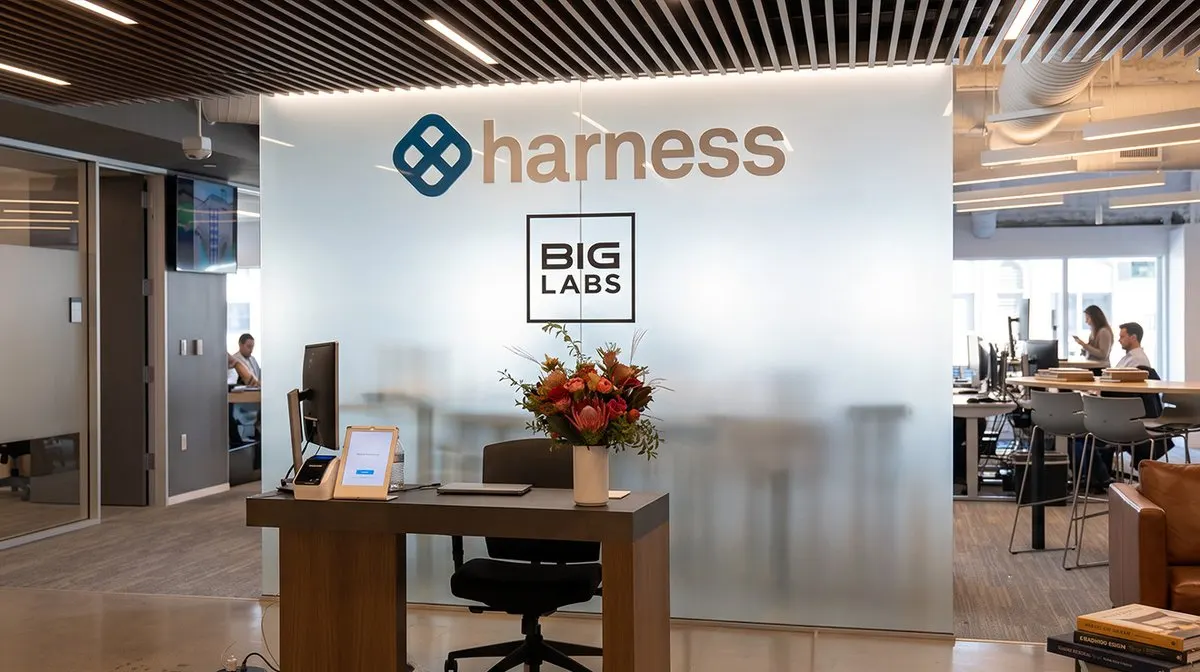
LLMday is a worldwide series of community events for engineers building with large language models, AI agents and machine learning. Across cities around the world, we bring together practitioners working on AI-powered products and systems to share real-world experience, learn from each other and explore how software engineering is changing in the age of AI.
Companies presenting:
AWS, Harness, Kong, MemexAI.Space, Microsoft, New Relic, ViralCircle
An AI prototype that looks remarkable in a controlled demo can struggle for months to make it into production. The real challenge begins when that prototype has to operate within the constraints of enterprise systems, data, security, and governance. This session explores four core pillars of production-grade AI systems: context engineering, evaluations, memory, and security and governance. We'll examine the common pitfalls teams encounter, why they matter, and the practices that make AI systems reliable in production. Designed for engineering teams building beyond prototypes, this talk provides a practical framework for creating AI systems that are reliable, measurable, secure, and ready for real-world use at scale.... Read more
As AI products become easier to build, distribution is becoming the defining advantage. The best technology doesn't always win, the companies that capture attention, build trust, and create strong distribution channels often do. In this talk, I'll share lessons from working with AI startups across growth and marketing, including how founder-led content, community, and organic distribution can help AI companies stand out in an increasingly crowded market. We'll explore practical strategies for turning expertise into attention, attention into credibility, and credibility into sustainable growth.... Read more
For years, infrastructure engineering has relied on one core assumption: systems behave deterministically. Given the same inputs, software produces the same outputs, failures are traceable, and operational behavior can be reasoned about through logs, metrics, and alerts. LLM-powered systems challenge that foundation entirely. As language models move beyond chat interfaces into agents, copilots, deployment workflows, automation platforms, and operational tooling, infrastructure is becoming capable of interpretation, reasoning, and autonomous action. Modern systems are no longer just executing instructions — they are generating decisions. This introduces a strange new category of engineering problems. In this talk, we explore how the rise of LLM-native systems is changing the meaning of reliability, observability, and operational trust. Unlike traditional systems, AI-driven platforms can remain technically healthy while producing semantically incorrect behavior. A service may have perfect uptime while making flawed decisions, triggering unintended actions, or confidently generating incorrect outputs. We’ll discuss: Why deterministic engineering assumptions break in AI-native systems The difference between infrastructure failures and semantic failures Reliability challenges introduced by agents and tool-calling workflows Why hallucinations are operational problems, not just model problems The limits of traditional observability for LLM systems Emerging ideas around evaluation, guardrails, and AI reliability engineering What the future role of platform and reliability engineers may look like in increasingly autonomous environments This session is designed for engineers, builders, and operators working with modern AI systems who want to better understand the operational realities of deploying intelligent systems beyond demos and prototypes.... Read more
Multi-agent systems built on MCP are rapidly moving from prototypes into production and the ecosystem is discovering that the hardest problems are not in the agent logic, but in the infrastructure surrounding it. This talk directly addresses one of the most common gaps practitioners report: how do you govern traffic between agents, models, and MCP servers at scale? We'll walk through a live demo built around a fictional company, NexusWork, shipping a new release of their project management product. Their multi-agent system processes customer feedback arriving from global social media channels, correlates it with GitHub issue data, and autonomously takes action: filing pull requests and generating region-specific sales briefs all without human intervention. What makes this demo instructive isn't the happy path. It's what's happening underneath: every LLM call, every MCP tool invocation, every agent-to-agent handoff traverses a governed data plane. We'll show concretely how observability, authentication, rate limiting, prompt injection defense, and multi-provider routing are enforced at the infrastructure layer not bolted on per-agent.... Read more
Every LLM agent prototype starts with the same uncomfortable workaround: rebuild the user's context, stuff more into the prompt, retrieve a few documents, and hope the next turn has enough information. That works for demos, but it breaks down when agents need to return to the same user, remember preferences, reuse shared knowledge, and keep state across sessions. This talk shows a practical memory-tool pattern for LLM agents. We will look at where chat history, prompt stuffing, and ad hoc retrieval fall short, then walk through an explicit memory layer where agents can list, read, write, patch, and search durable memory as part of their normal tool loop. The demo will use MemexAI, an open-source Postgres-backed memory layer, but the goal is to leave attendees with a reusable design pattern they can adapt to LangChain, Vercel AI SDK, LlamaIndex, or their own agent stack. Attendees will learn: - How to separate retrieval, chat history, and durable agent memory. - How to design memory tools with scoped user/shared state, revisions, and inspectable writes. - How to inject memory back into the model context without hiding state inside opaque prompts.... Read more
As AI evolves from simple chatbots to autonomous agents, the challenge shifts from monitoring single inferences to observing complex "agentic loops." The AWS Strands SDK simplifies this by using a model-driven approach where LLMs plan and execute tools autonomously. However, in a serverless environment like AWS Lambda, these multi-step loops can become a "black box," leading to unpredictable latencies, soaring token costs, and difficult-to-trace hallucinations. In this session, we demonstrate how to instrument AWS Strands agents using OpenTelemetry (OTel) to gain deep visibility into the "thought process" of your AI. We will explore the integration of the AWS Distro for OpenTelemetry (ADOT) with the Strands SDK to capture granular telemetry across agent cycles, tool calls, and LLM reasoning steps.... Read more
Every team I've worked with this year started the same way: someone watched a Cursor demo on a Tuesday, and by Friday they were three weeks into building their own agent framework. By month two, they had a half-finished tool router, a custom retry loop, a memory abstraction nobody understood, and a production incident. I'm an AWS Developer Advocate, and over the last year I've sat with 12 teams shipping agentic systems on Bedrock — from a fintech doing fraud triage to a healthcare team summarizing clinical notes. The teams that shipped on time had one thing in common: they stopped building framework-shaped things and started writing boring, debuggable Python around the Strands SDK. This talk is the contrarian version of "how to build agents." I'll walk through the seven framework anti-patterns I keep seeing (the Tool Registry, the Custom Memory Layer, the Orchestration DSL, and four more), show the production incidents each one caused, and then live-code a multi-tool agent using Strands in under 10 minutes — the same agent two of those 12 teams ended up with after they deleted their framework. You'll leave with: a checklist for spotting "framework drift" in your own codebase, a working Strands agent on GitHub you can fork tonight, and an opinionated answer to "should we build this in LangGraph or Strands or just plain Python?" No slides about the future of AI. No "agentic transformation." Just code, war stories, and the diff between what teams thought they needed and what actually shipped.... Read more
The AI stack is becoming increasingly interconnected. Agents now invoke tools, interact with MCP servers, maintain memory, and coordinate with other agents to complete tasks that were once handled by traditional software systems. This session examines the new attack surface created by agent ecosystems, tool integrations, memory layers, and autonomous workflows. As AI systems become more interconnected and autonomous, trust extends far beyond code and infrastructure, shaping how agents access tools, retain context, make decisions, and interact with one another. The result is a new set of security and governance challenges that traditional software supply chain models were never designed to address. From agent frameworks to runtime interactions, this talk provides a security-first view of the emerging AI supply chain and the controls needed to govern it.... Read more
19:00
Wrap up
Scan each other's QR codes & head to a nearby pub!
As AI products become easier to build, distribution is becoming the defining advantage. The best technology doesn't always win, the companies that capture attention, build trust, and create strong distribution channels often do.
In this talk, I'll share lessons from working with AI startups across growth and marketing, including how founder-led content, community, and organic distribution can help AI companies stand out in an increasingly crowded market. We'll explore practical strategies for turning expertise into attention, attention into credibility, and credibility into sustainable growth.
Bio
Vanshika Gupta is a growth and product marketer focused on helping technology companies tell better stories and reach new audiences. She is the founder of ViralCircle and worked on marketing at Julius AI, combining content, product positioning, and growth strategy. With a background in computer science and technology management, she brings a blend of technical understanding and creative marketing to AI and startup ecosystems.
Kaustubha Shravan
Microsoft
When Infrastructure Starts Making Decisions
Abstract
For years, infrastructure engineering has relied on one core assumption: systems behave deterministically. Given the same inputs, software produces the same outputs, failures are traceable, and operational behavior can be reasoned about through logs, metrics, and alerts. LLM-powered systems challenge that foundation entirely. As language models move beyond chat interfaces into agents, copilots, deployment workflows, automation platforms, and operational tooling, infrastructure is becoming capable of interpretation, reasoning, and autonomous action. Modern systems are no longer just executing instructions — they are generating decisions. This introduces a strange new category of engineering problems. In this talk, we explore how the rise of LLM-native systems is changing the meaning of reliability, observability, and operational trust. Unlike traditional systems, AI-driven platforms can remain technically healthy while producing semantically incorrect behavior. A service may have perfect uptime while making flawed decisions, triggering unintended actions, or confidently generating incorrect outputs. We’ll discuss: Why deterministic engineering assumptions break in AI-native systems The difference between infrastructure failures and semantic failures Reliability challenges introduced by agents and tool-calling workflows Why hallucinations are operational problems, not just model problems The limits of traditional observability for LLM systems Emerging ideas around evaluation, guardrails, and AI reliability engineering What the future role of platform and reliability engineers may look like in increasingly autonomous environments This session is designed for engineers, builders, and operators working with modern AI systems who want to better understand the operational realities of deploying intelligent systems beyond demos and prototypes.
Bio
Kaustubha V is a Solution Architect at Microsoft in the Silicon Cloud organization, where she works on scalable cloud platforms, AI-driven systems, automation frameworks, and developer productivity solutions. Her work focuses on building reliable infrastructure and intelligent systems for large-scale engineering workloads across Azure and multi-cloud environments. At Microsoft, she designs solutions that use machine learning to optimize compute resources such as memory, runtime, and CPU requirements. She has contributed to production-grade ML pipelines, telemetry platforms, benchmarking frameworks, and cloud-native automation services that improve operational efficiency and simplify engineering workflows. Kaustubha has strong experience in Azure, AWS, Google Cloud, Kubernetes, distributed systems, and secure cloud deployments. She holds multiple cloud and AI certifications and has earned the Kubestronaut distinction from the Cloud Native Computing Foundation. Beyond her engineering role, Kaustubha is active in AI research and technology communities. Her research interests include generative AI, machine unlearning, responsible AI, and bias mitigation in machine learning systems. She has authored research papers accepted at international workshops and conferences, including NeurIPS,ICCV, GHC ICLR, GHCI, IEEE and leading data science venues. She is also passionate about mentoring and community impact. Through initiatives such as Women Techmakers and Microsoft’s Code Without Barriers, she supports students and early-career professionals in learning cloud computing, AI, and software engineering.
Juhi Singh
Kong
The Production Gap: Why Governing Agent Traffic Is the Key to Shipping Multi-Agent Systems
Abstract
Multi-agent systems built on MCP are rapidly moving from prototypes into production and the ecosystem is discovering that the hardest problems are not in the agent logic, but in the infrastructure surrounding it. This talk directly addresses one of the most common gaps practitioners report: how do you govern traffic between agents, models, and MCP servers at scale? We'll walk through a live demo built around a fictional company, NexusWork, shipping a new release of their project management product. Their multi-agent system processes customer feedback arriving from global social media channels, correlates it with GitHub issue data, and autonomously takes action: filing pull requests and generating region-specific sales briefs all without human intervention. What makes this demo instructive isn't the happy path. It's what's happening underneath: every LLM call, every MCP tool invocation, every agent-to-agent handoff traverses a governed data plane. We'll show concretely how observability, authentication, rate limiting, prompt injection defense, and multi-provider routing are enforced at the infrastructure layer not bolted on per-agent.
Bio
Juhi is the Developer Evangelist (APAC) at Kong. She’s passionate about helping the developer community and building strong connections. Outside of work, Juhi enjoys reading, staying fit, trekking, traveling, and cooking. She describes herself as a "product of a community" with many hobbies and passions that she loves to explore, even though keeping up with them can be a challeng
Sooraj Sanker
MemexAI.Space
Stop Rebuilding Context: Memory Tools for LLM Agents
Abstract
Every LLM agent prototype starts with the same uncomfortable workaround: rebuild the user's context, stuff more into the prompt, retrieve a few documents, and hope the next turn has enough information. That works for demos, but it breaks down when agents need to return to the same user, remember preferences, reuse shared knowledge, and keep state across sessions. This talk shows a practical memory-tool pattern for LLM agents. We will look at where chat history, prompt stuffing, and ad hoc retrieval fall short, then walk through an explicit memory layer where agents can list, read, write, patch, and search durable memory as part of their normal tool loop. The demo will use MemexAI, an open-source Postgres-backed memory layer, but the goal is to leave attendees with a reusable design pattern they can adapt to LangChain, Vercel AI SDK, LlamaIndex, or their own agent stack. Attendees will learn: - How to separate retrieval, chat history, and durable agent memory. - How to design memory tools with scoped user/shared state, revisions, and inspectable writes. - How to inject memory back into the model context without hiding state inside opaque prompts.
Bio
Sooraj Sanker is a Bengaluru-based fullstack and AI engineer, and the founder of MemexAI, an open-source Postgres-backed memory layer for long-horizon AI agents. He spent roughly six years at Hasura and PromptQL, where he worked on conversational analytics, AI agent interfaces, tool-based workflows, artifact-aware chat, and state management for distributed agent execution. His work sits at the intersection of agent infrastructure, context engineering, data UX, and production reliability.
Jones Zachariah Noel N
New Relic
Monitoring the Agentic Loop: OTel-Driven Observability for AWS Strands on Lambda
Abstract
As AI evolves from simple chatbots to autonomous agents, the challenge shifts from monitoring single inferences to observing complex "agentic loops." The AWS Strands SDK simplifies this by using a model-driven approach where LLMs plan and execute tools autonomously. However, in a serverless environment like AWS Lambda, these multi-step loops can become a "black box," leading to unpredictable latencies, soaring token costs, and difficult-to-trace hallucinations. In this session, we demonstrate how to instrument AWS Strands agents using OpenTelemetry (OTel) to gain deep visibility into the "thought process" of your AI. We will explore the integration of the AWS Distro for OpenTelemetry (ADOT) with the Strands SDK to capture granular telemetry across agent cycles, tool calls, and LLM reasoning steps.
Bio
Jones is a seasoned developer turned architect who currently at New Relic being an observability advocate working as Senior Developer Relations Engineer and also focuses on infrastructure and development on cloud platforms like AWS and well into the Serverless ecosystem. Jones is also recognised as AWS Serverless Hero who is enabling the community with latest happenings in the Serverless space with his newsletter, blogs and podcast. Along with this, Jones also regularly shares the best of cloud + observability at multiple global forums and conferences.
Vishal Alhat
AWS
Stop Building Agent Frameworks: Lessons from 12 Strands Deployments in Production
Abstract
Every team I've worked with this year started the same way: someone watched a Cursor demo on a Tuesday, and by Friday they were three weeks into building their own agent framework. By month two, they had a half-finished tool router, a custom retry loop, a memory abstraction nobody understood, and a production incident. I'm an AWS Developer Advocate, and over the last year I've sat with 12 teams shipping agentic systems on Bedrock — from a fintech doing fraud triage to a healthcare team summarizing clinical notes. The teams that shipped on time had one thing in common: they stopped building framework-shaped things and started writing boring, debuggable Python around the Strands SDK. This talk is the contrarian version of "how to build agents." I'll walk through the seven framework anti-patterns I keep seeing (the Tool Registry, the Custom Memory Layer, the Orchestration DSL, and four more), show the production incidents each one caused, and then live-code a multi-tool agent using Strands in under 10 minutes — the same agent two of those 12 teams ended up with after they deleted their framework. You'll leave with: a checklist for spotting "framework drift" in your own codebase, a working Strands agent on GitHub you can fork tonight, and an opinionated answer to "should we build this in LangGraph or Strands or just plain Python?" No slides about the future of AI. No "agentic transformation." Just code, war stories, and the diff between what teams thought they needed and what actually shipped.
Bio
Vishal Alhat is a Developer Advocate at AWS, a former AWS Hero, and a HashiCorp Ambassador based in Bengaluru. Over 11 years he's worn most of the hats engineers care about — backend, platform, SRE, security — and now spends his days helping developers ship agentic AI on Bedrock without setting their on-call rotation on fire. He's mentored 5,000+ developers, picked up a Community Builder of the Year award along the way, and has a soft spot for the boring middle of the stack: observability, evals, IaC, and the unglamorous work that keeps production quiet at 3 AM. He writes technical blogs and posts mostly-useful things on social platforms. Recent Talks: AWS re:Invent, AWS Summit India, KCD Sri Lanka, AWS UG Hong Kong meetup.
Roshan Piyush
Harness
Rethinking Supply Chain Security in the Age of Agentic AI
Abstract
The AI stack is becoming increasingly interconnected. Agents now invoke tools, interact with MCP servers, maintain memory, and coordinate with other agents to complete tasks that were once handled by traditional software systems.
This session examines the new attack surface created by agent ecosystems, tool integrations, memory layers, and autonomous workflows. As AI systems become more interconnected and autonomous, trust extends far beyond code and infrastructure, shaping how agents access tools, retain context, make decisions, and interact with one another. The result is a new set of security and governance challenges that traditional software supply chain models were never designed to address.
From agent frameworks to runtime interactions, this talk provides a security-first view of the emerging AI supply chain and the controls needed to govern it.
Bio
Roshan Piyush is Head of Security Research at Harness, where he leads research across application, API, runtime, and DevSecOps security. An OSCP-certified security expert, he has spent more than a decade building security products and advancing security engineering at companies including Harness, Traceable, Ping Identity, and Oracle. He is also the lead of the OWASP crAPI project and holds multiple patents in application security and data protection.
Shubham Jindal
Harness
KeynoteAI Demos Are Easy. Enterprise AI Is Not
Abstract
An AI prototype that looks remarkable in a controlled demo can struggle for months to make it into production. The real challenge begins when that prototype has to operate within the constraints of enterprise systems, data, security, and governance.
This session explores four core pillars of production-grade AI systems: context engineering, evaluations, memory, and security and governance. We'll examine the common pitfalls teams encounter, why they matter, and the practices that make AI systems reliable in production.
Designed for engineering teams building beyond prototypes, this talk provides a practical framework for creating AI systems that are reliable, measurable, secure, and ready for real-world use at scale.
Bio
Shubham Jindal is Director of AI Engineering at Harness, where he leads AI initiatives focused on enterprise AI systems and agent-based architectures. Previously, he was a Founding Engineer at Traceable AI and spent nearly three years at AppDynamics working on browser monitoring and web performance technologies. An IIT Delhi Computer Science graduate, Shubham is also an inventor with multiple patents in AI and anomaly detection, and a frequent speaker on AI agents, MCPs, and modern software systems.